SSL Channel Chart Alert Indicator MT4
Platform: MT4 Type: Channel Last update: August 1, 2026The SSL Channel Chart Alert Indicator for MT4 is built on moving averages using the Semaphore Signal Level concept. It gives clear visual buy and sell signals based on the crossover of two lines, making it a solid fit for trend-trading strategies.
What makes this tool useful is that it handles both entry and exit. A crossover signals a chance to enter a trade and ride the trend. Later, when the lines cross again, it signals the trend is shifting, telling you it’s time to exit if you’re still in the trade.
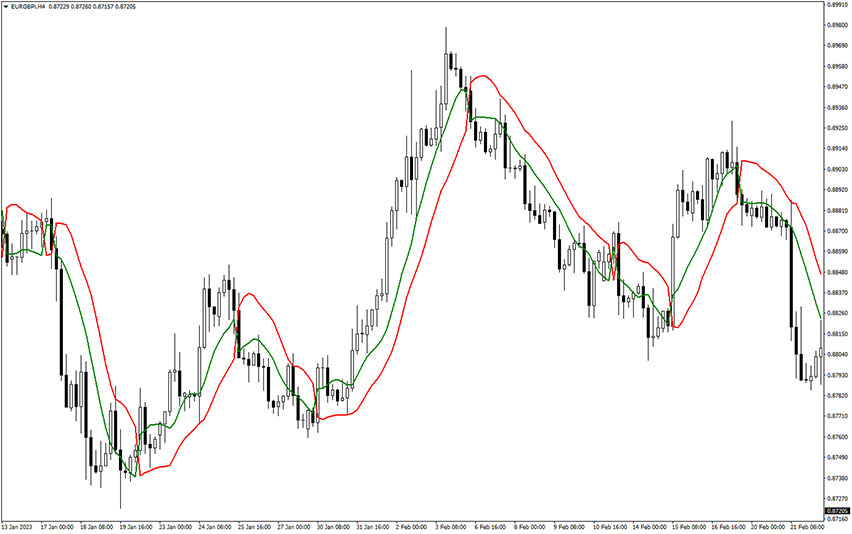
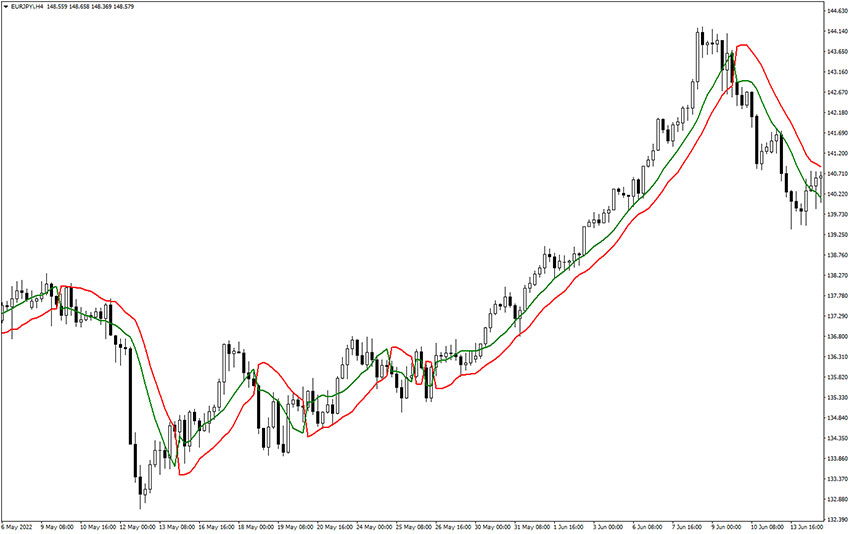
Example chart:
How to use the SSL Channel Chart Alert Indicator for MT4?
The SSL Channel Chart Alert Indicator plots two moving average line – red and green, that shift together and form a channel around price.
A crossover of the these two lines signals a shift in price direction.
Before treating it as an entry, check whether the crossover happens with strong candle bodies and rising volume. Weak, indecisive candles at the crossover point are more likely to fail and snap back.
Combining SSL Channel Chart with other technical analysis indicators
SSL crossovers are frequent and not all of them turn into real trends. This is where a second indicator helps filter out weak signals before you trade them.
Pair SSL with the ATR to check volatility. If the ATR is flat or shrinking, the market lacks the momentum to sustain a new trend, so treat the crossover with caution. If ATR is expanding, the move has more room to run.
Pair SSL with RSI to confirm momentum direction. For a bullish SSL crossover, RSI should be above 50 and rising. For a bearish crossover, RSI should be below 50 and falling. If RSI disagrees with the SSL signal, rather skip the trade.
Bottom Line
The real value of the SSL Channel Chart Alert Indicator for MetaTrader 4 is watching how price behaves around the channel, not just the crossover itself.
Strong trends hug one line and rarely touch the other. When price starts chopping between both lines, that’s often your first clue the trend is losing steam, well before the lines actually cross.
Read the channel, not just the signal, and you’ll catch trend shifts earlier.